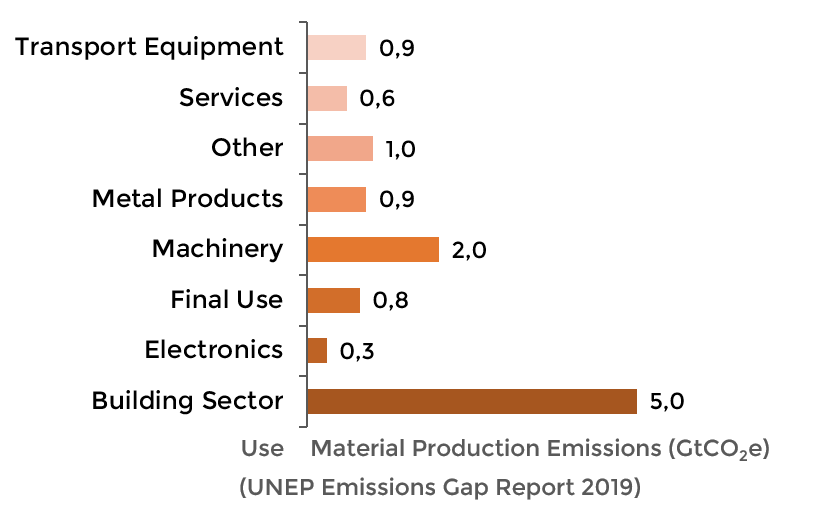
Worldwide, the Building Sector is responsible for
of the primary energy consumption (UNEP, 2009).
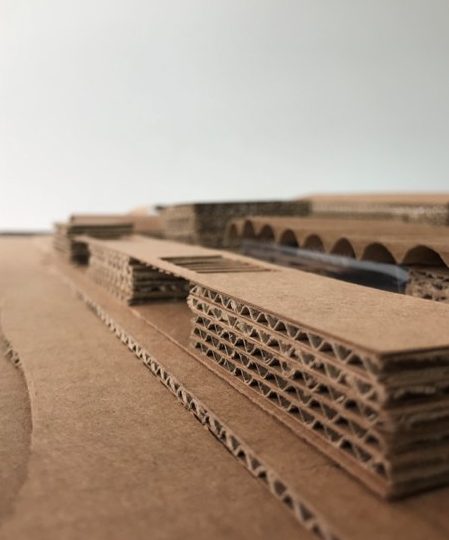
Also, building materials account for more than 40% of total CO2 emissions released from material production.
The growth of cities and urban agglomerations following the current standards of dependence on carbon-emitting energy sources and environmental issues, highlighted by the gap between cities and biodiversity, evokes
My graduation final project relates to this concern, by proposing an architectural design for a Community Centre that explores
to reduce, avoid, capture and store carbon emissions.
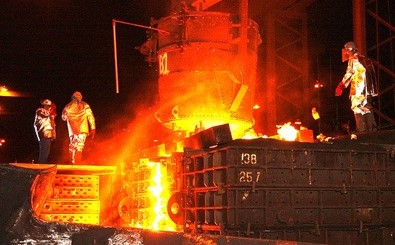
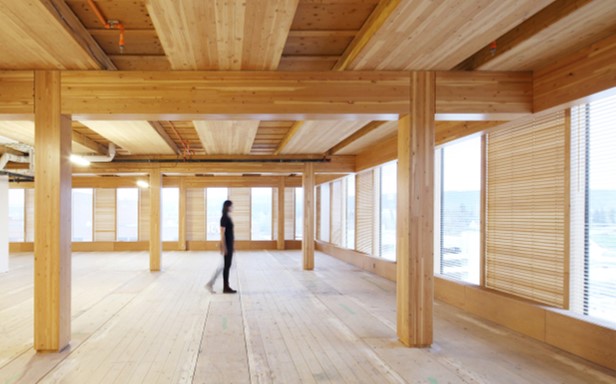
has a large share in the carbon footprint of buildings. The closer is a material to its natural state, the lower its CO2-e (Sue,2006).

In addition, Hertwich et al (2019) point out design strategies that may help to avoid the construction's energy consumption, such as:
~ more intensive space use through densification or use diversification ~
~ buildings life extension and reuse ~
~ recycling of building materials ~
~ retrofit into more energy efficient standards ~
~ more intensive space use ~
~ buildings life extension ~
~ recycling ~
~ retrofit and reuse ~
is a powerful strategy to reduce the energy consumption of buildings. This approach makes the best of local climatic conditions to enhance the passive behaviour of buildings, meanwhile contributing to healthier and more comfortable indoor spaces.
Application of decarbonization and bioclimatic strategies

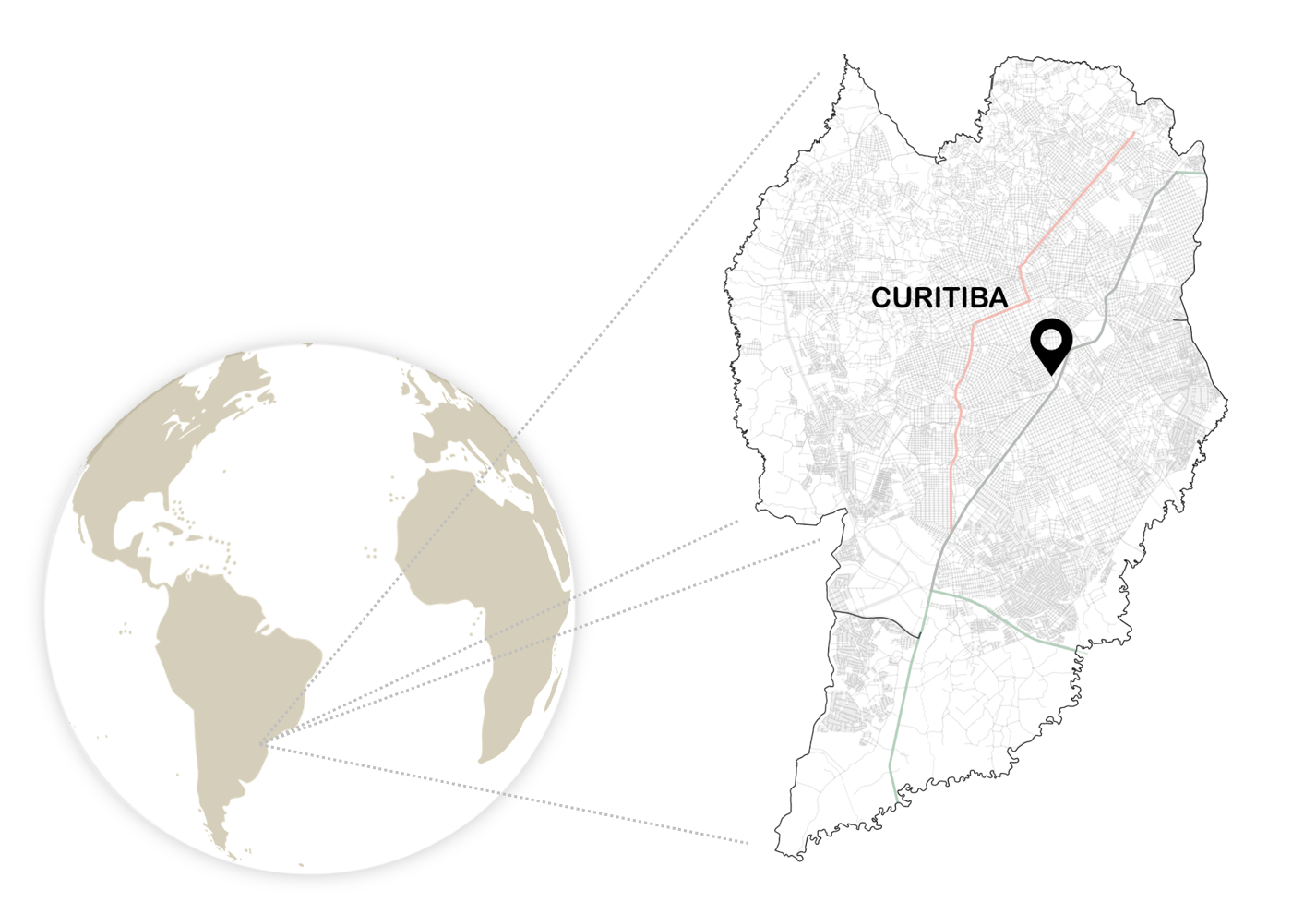
Located in Curitiba, southern Brazil and where subtropical humid climate applies, the project explores:
~ Low-carbon materiality ~
~ Life-spam extension & reuse of an existing building ~
~ Passive bioclimatic strategies ~
~ Nature-based approaches with plants and algae systems for CO2 retention ~
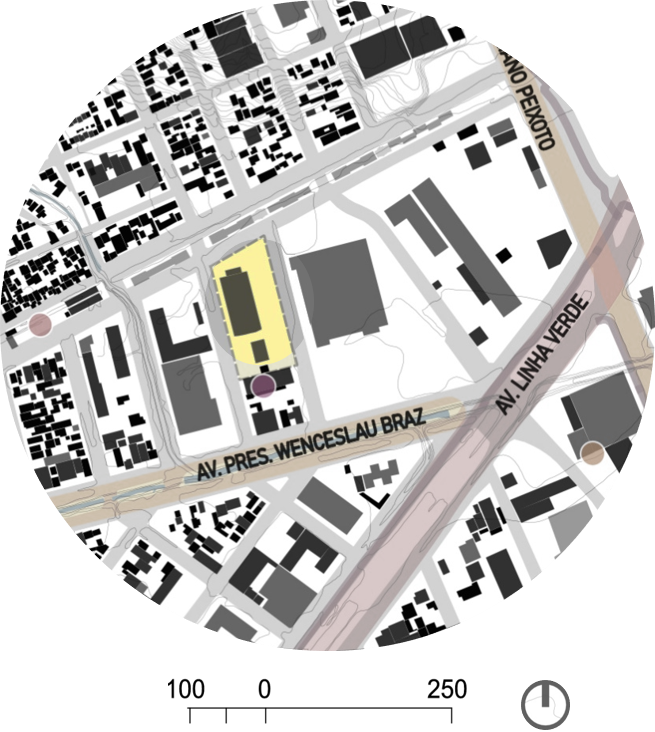
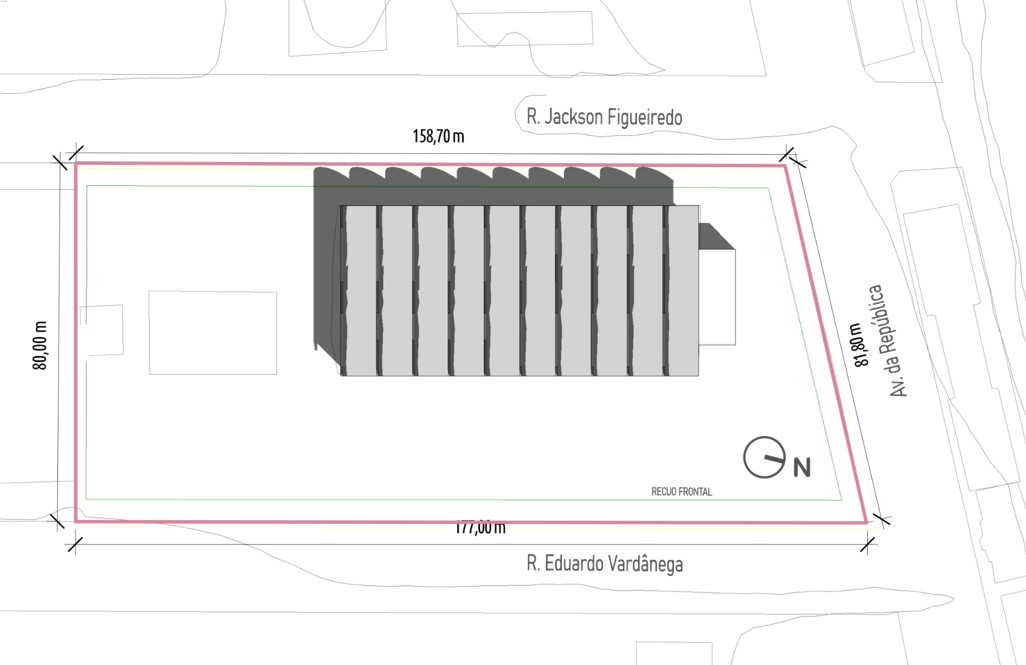
Among the industrial remnants within the consolidated urban area in Curitiba, a particular building holds an underestimated architectural value. It is a fine piece of work from the


Eladio's building is located in Parolin, a neighborhood where structural roadways fostered logistics and industrial activities nearby. It is also characterized by horizontal densification.

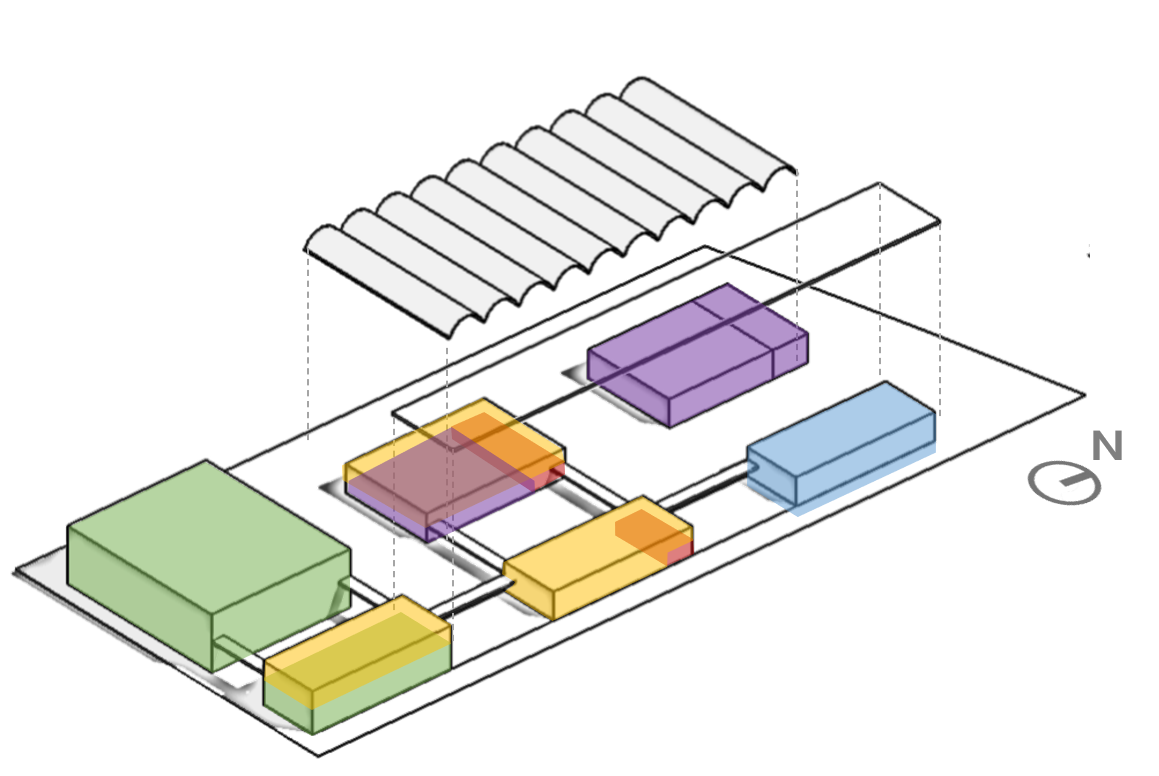
The modules and guidelines from the existing ceramic vault oriented the schematic space plan, to reach volume balance and rythm between occupied and empty regions.